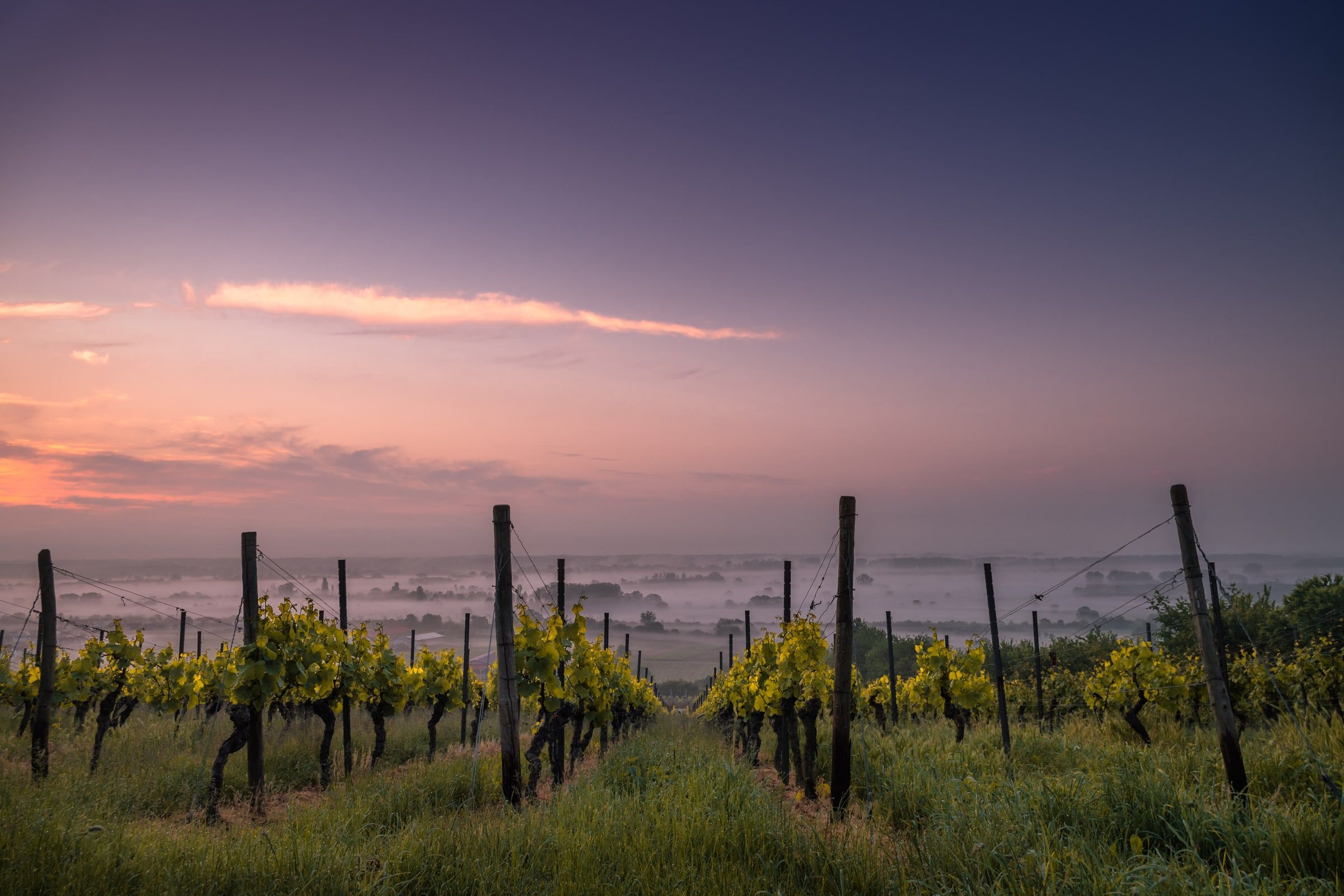
oowine
Eight thousand years. One glass.
A scrolling history of wine, from Neolithic clay to the glass in your hand.
Chapter I Georgia · Armenia · Anatolia · Iran
6000 BC
c. 6000 BC

The First Vintage
Neolithic villages of the South Caucasus and eastern Anatolia tame the wild grape.
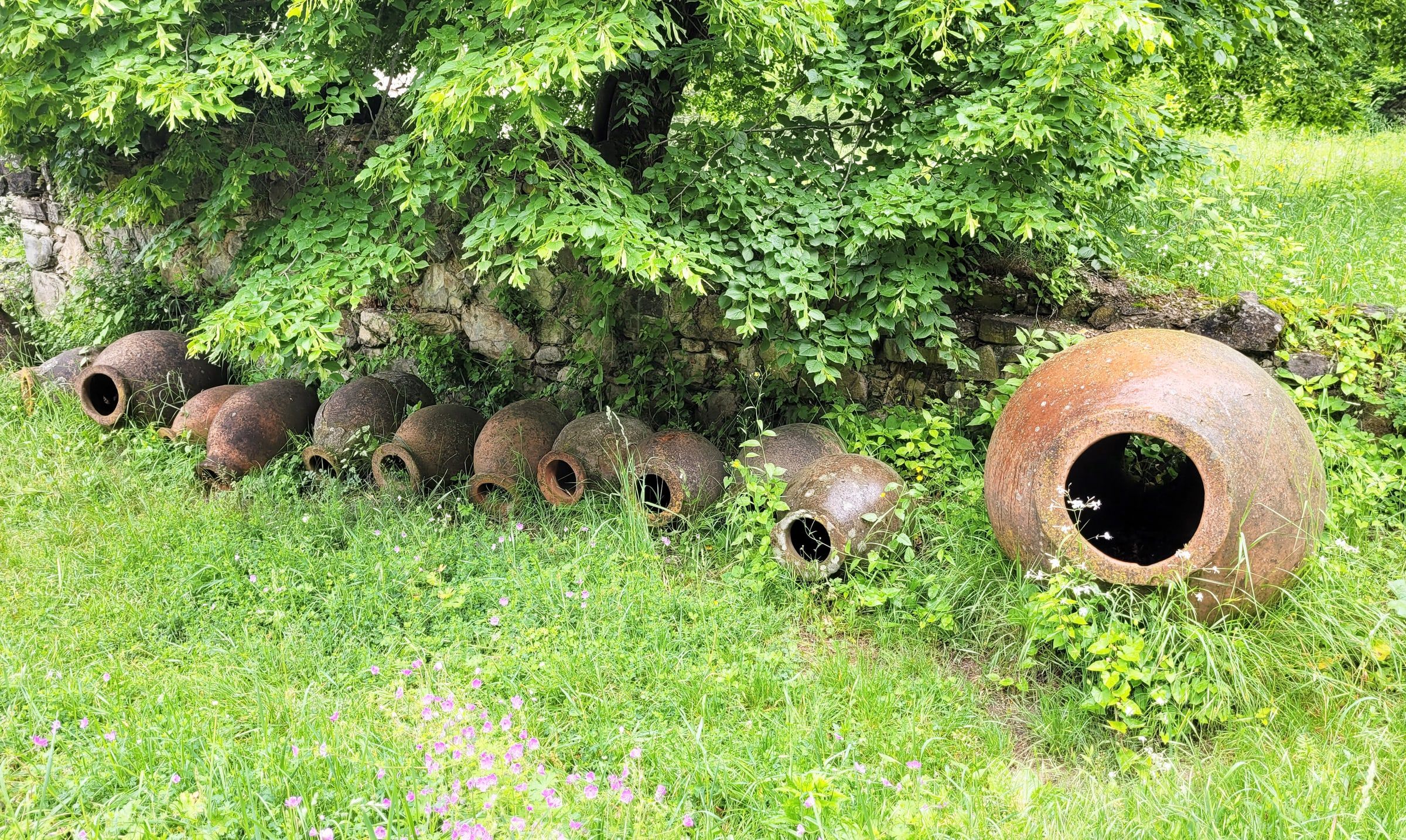
Somewhere on the wooded slopes between the Black Sea and the Caspian, a few thousand years after the last ice retreated, villagers of the Shulaveri–Shomu culture did something no one had done before. They gathered wild grapes, crushed them, and let the juice sit in clay. Yeast did the rest.
The evidence is almost invisible: a faint chemical fingerprint of tartaric acid clinging to the inside of pottery shards, together with grape pollen and the remains of fruit flies. But it is enough to place the oldest known wine at around 6000 BC, in what is now Georgia. A little later, and a little further south, the same story repeats in the Zagros Mountains of Iran and in a cave above the Arpa River in Armenia, where an entire Copper Age winery survives intact.
The vessel these people used still exists. The qvevri, a large egg-shaped clay jar buried to its neck in the ground, has been in continuous use for eight millennia. It is where this story begins, and, as we will see, where it returns.
- Pottery from Gadachrili Gora and Shulaveris Gora in Georgia carries tartaric-acid residue dated to around 6000–5800 BC.
- Hajji Firuz Tepe in Iran's Zagros Mountains yielded wine jars from about 5400 BC, sealed with tree resin.
- Areni-1 cave in Armenia (c. 4100 BC) is the oldest known winery: a treading floor, a press and fermentation vats, intact.
- Genetic studies trace the domestication of Vitis vinifera to the Caucasus and Western Asia roughly 11,000 years ago.
Chapter II Egypt · Mesopotamia · the Levant
3000 BC
c. 3000 BC
_006.jpg)
Wine of the Pharaohs
In the Nile Delta and along the Euphrates, wine becomes a drink of kings, gods and the dead.
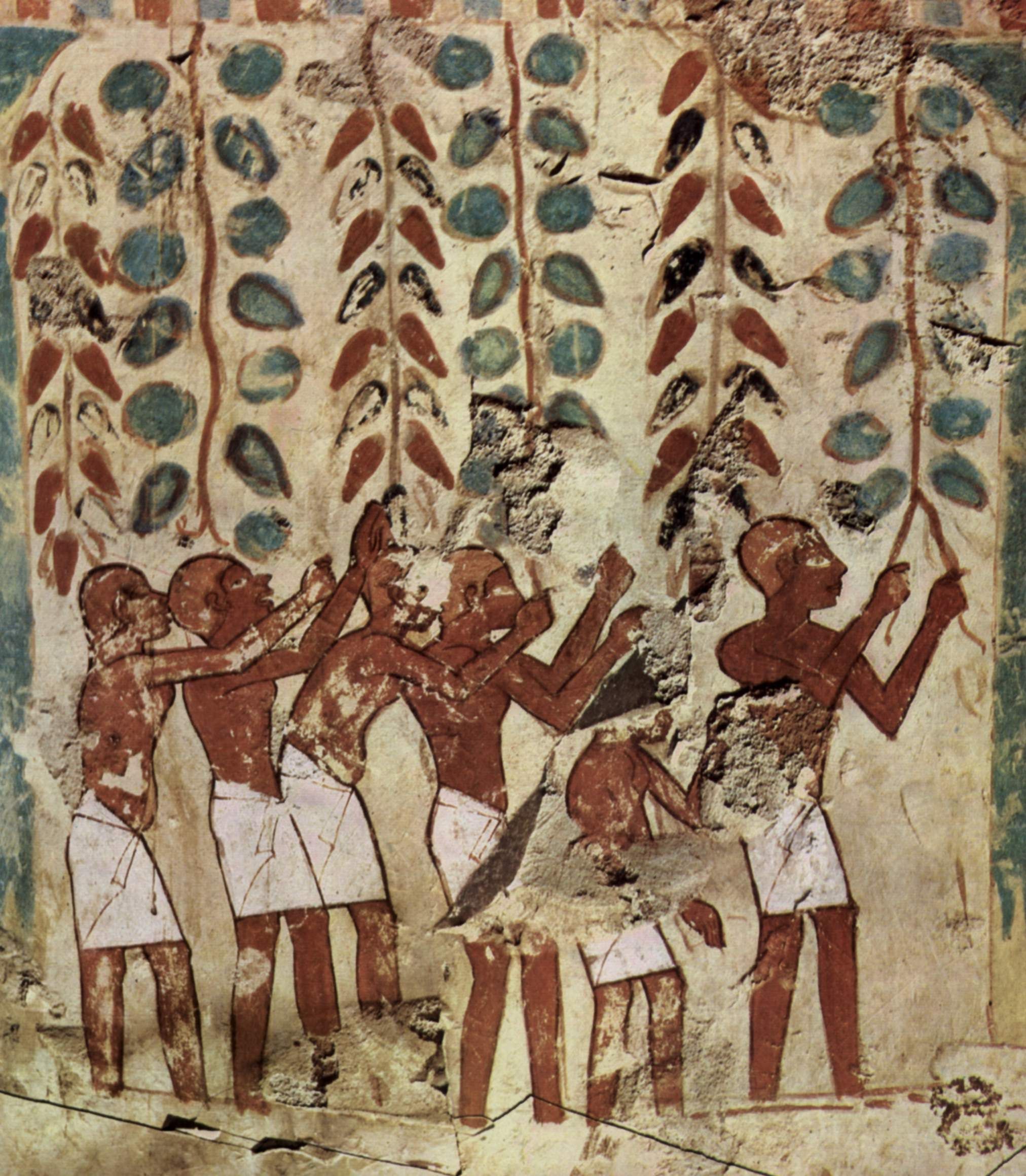
By the time the pyramids rose, wine already had a bureaucracy. Egypt could not grow much of it at first, so the earliest pharaohs imported it by the shipload from Canaan, and then planted their own vineyards on the fertile islands of the Nile Delta. Vines were trained over pergolas, grapes were trodden by foot in great vats, and the juice was sealed in amphorae with the royal stamp.
Nothing about the process was casual. Jars found in the tomb of Tutankhamun are labelled with the regnal year, the vineyard’s location, the estate that owned it and the name of the chief vintner. Three thousand years before Bordeaux, Egypt had vintages, appellations and producers.
Wine here was never simply a drink. It was the blood of Osiris, poured for the gods and sealed in tombs to see the dead through eternity. Downstream in Mesopotamia, where barley beer was the staple, wine floated south on the Euphrates from the mountains of Armenia, a luxury for temples and kings, and a reminder that the vine still grew best where it had been born.
- The tomb of Scorpion I at Abydos (c. 3150 BC) held around 700 jars of wine, imported from the Levant and flavoured with figs and herbs.
- Tomb paintings such as those of Nakht (c. 1400 BC) show every step: picking, treading, pressing and sealing the jars.
- Tutankhamun was buried with 26 wine jars, each inscribed with the year, the vineyard, the estate and the name of the winemaker: the world's first wine labels.
- In Mesopotamia beer was the everyday drink; wine arrived by river from the northern highlands and belonged to temples and palaces.
Chapter III Aegean · Italy · Gaul · Hispania · the Rhine
800 BC
c. 800 BC – AD 400

Gods, Symposia and Legions
Greece gives wine a god and a philosophy; Rome gives it an empire.
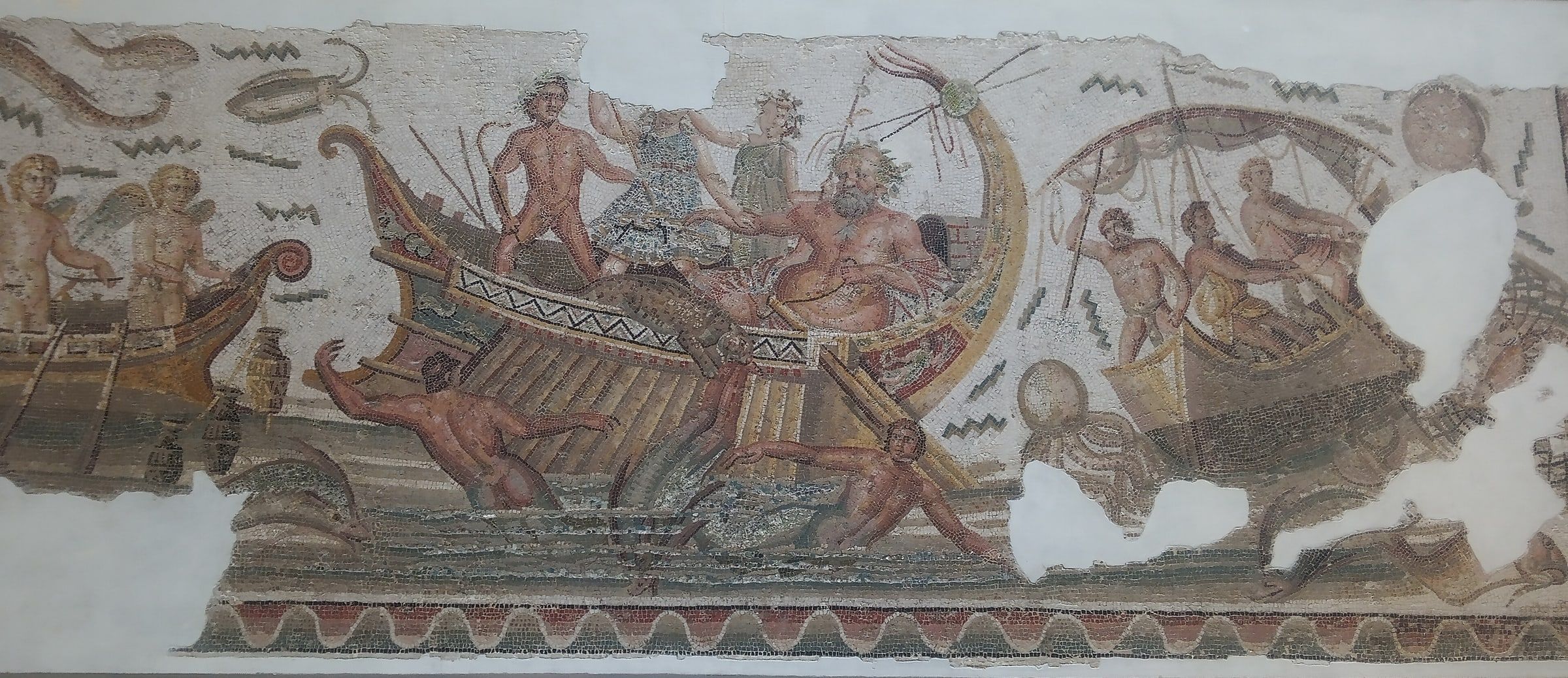
The Greeks did not invent wine, but they invented the idea of it. In Dionysus they gave it a god who was both ecstasy and danger; in the symposium they gave it a ritual, a room of reclining men debating philosophy while a master of ceremonies decided how much water to mix into the krater. Wine, properly diluted, was civilisation. Wine drunk neat was what barbarians did.
Wherever Greek ships went, vines followed: to Sicily, to the heel and toe of Italy, to the new colony of Massalia on the coast of Gaul. Then Rome took over, and did what Rome did best: scaled it. Writers like Columella and Pliny catalogued grape varieties, trellising systems and famous crus. Falernian from the slopes of Campania was the first wine to be sought by name and by vintage. In Pompeii, bars served wine by the cup to anyone with a coin.
And the legions marched north. Along the Rhône, the Mosel, the Rhine and the Danube, soldiers and settlers planted the vineyards that would become Burgundy, Germany and Austria. When the empire fell, the vines stayed.
- Greeks drank wine mixed with water from a krater; drinking it neat was considered barbaric.
- Greek colonists carried vines to Sicily, southern Italy and Massalia (Marseille) around 600 BC; southern Italy became Oenotria, the land of vines.
- The Opimian vintage of 121 BC was still being drunk, and praised, more than a century later.
- Roman legions and settlers planted the Rhône, the Mosel, the Rhine and the Danube: the skeleton of Europe's wine map today.
In vino veritas.
Pliny the Elder, Naturalis Historia, Book XIV
Chapter IV Burgundy · the Rhine · Champagne · Persia
500 AD
c. AD 500 – 1500

The Monks' Centuries
After Rome falls, monasteries keep the vine alive, and discover that place matters.
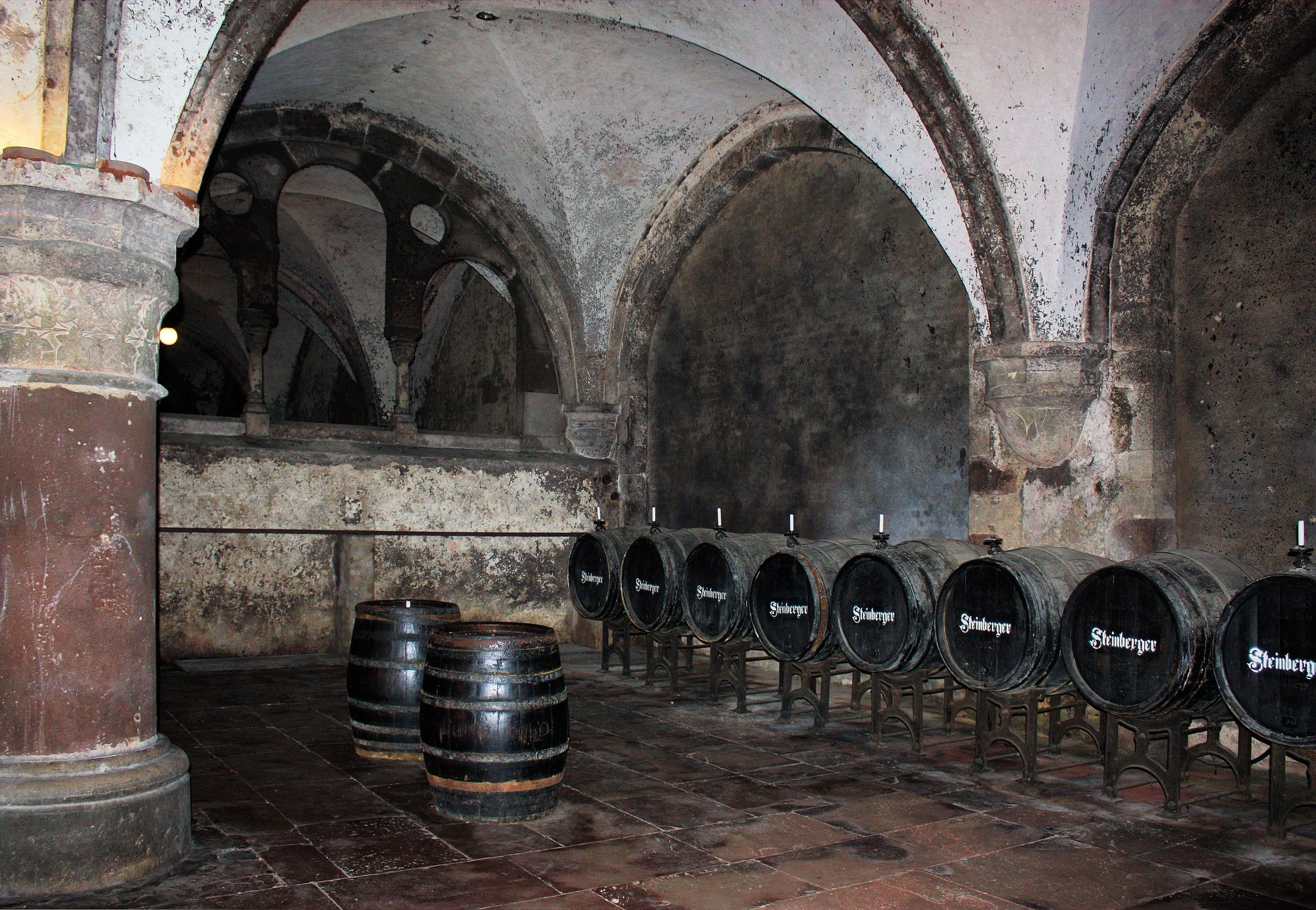
When the Western Empire collapsed, the roads, the trade and the cities went with it. Wine survived because the Church could not do without it. Every mass required it, every monastery had to produce it, and the monasteries, unlike kings and warlords, lasted for centuries. They kept records. They compared one slope with the next. They had time.
Nowhere did this patience go further than in Burgundy. The Cistercians of Cîteaux planted the Clos de Vougeot and enclosed it in stone, and over generations learned that wine from one plot tasted reliably different from wine made a few metres away. They drew the lines, named the climats, and gave the world the idea that a wine could belong to a place. Along the Rhine, Benedictines at Johannisberg and Cistercians at Eberbach did the same, and in 1435 a steward’s ledger recorded a new grape called Riesling.
Wine’s medieval story is not only Christian. In Persia, where the vine had always grown, poets made the cup a symbol of love and transcendence. Khayyam and Hafez wrote wine into literature so deeply that it never left.
- The Church needed wine for the Eucharist, so every monastery needed a vineyard; the Benedictine and Cistercian orders became Europe's great wine estates.
- Cistercian monks from Cîteaux (founded 1098) walled the Clos de Vougeot and, legend says, tasted the soil to map Burgundy's climats: the birth of terroir.
- Riesling is first recorded by name in a cellar inventory at Rüsselsheim on the Rhine, in 1435.
- Beyond Christendom, wine lived on in verse: the quatrains of Omar Khayyam and the ghazals of Hafez celebrate the cup even where the law forbade it.
Although we read that wine is no drink for monks, since the monks of our day cannot be persuaded of this, let us at least agree to drink moderately.
The Rule of Saint Benedict, chapter 40 (c. 530)
Chapter V Mexico · Chile · the Cape · Madeira · Champagne · Bordeaux
1500
1500 – 1855
.jpg)
Ships, Bottles and the New World
Vines cross the oceans, glass and cork let wine age, and Bordeaux writes its list.
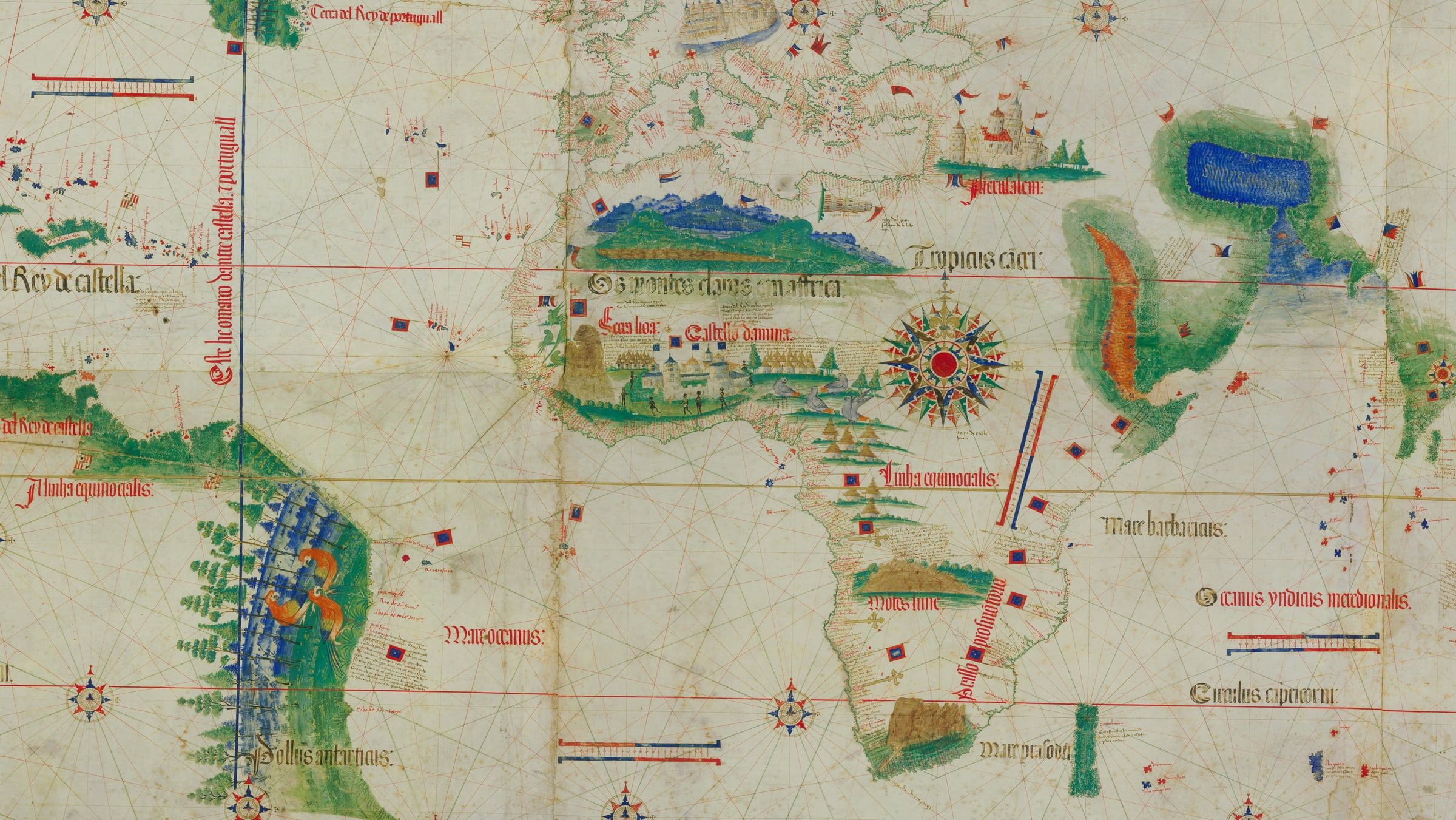
The vine had taken eight thousand years to reach the Atlantic. It took the Spanish fifty years to carry it across. Missionaries needed sacramental wine, and conquistadors needed something to drink, so cuttings travelled in the holds of galleons to Mexico, Peru, Chile and the foothills of the Andes. The Dutch planted the Cape of Good Hope as a refreshment station for ships bound to the East Indies; within a century, the sweet wine of Constantia was being poured at European courts.
At home, two quiet technologies changed wine more than any conquest. Coal-fired English furnaces produced glass strong enough to survive the road, and cork, long known but little used, sealed the bottle tight. For the first time wine could be laid down and improve. Port, Madeira and Sherry, fortified with brandy to survive sea voyages, became the drinks of a maritime empire. In Champagne a Benedictine cellarer named Pierre Pérignon spent decades perfecting the art of blending; a century later a young widow named Clicquot worked out how to make the bubbles clear.
By 1855 wine had become a business of names. Asked for a list of the best for the Paris exhibition, Bordeaux’s brokers ranked the châteaux of the Médoc by price into five classes. The list, written in an afternoon, still governs the region.
- In 1524 Hernán Cortés ordered every settler in New Spain to plant vines; by the 1550s there were vineyards in Peru, Chile and Argentina.
- On 2 February 1659 Jan van Riebeeck wrote in his journal: 'Today, praise be to God, wine was pressed for the first time from Cape grapes.'
- Stronger English glass bottles (1630s) and cork stoppers let wine age for the first time; Port, Madeira and Sherry became the fortified wines of a maritime age.
- For the 1855 Exposition Universelle, Bordeaux brokers ranked the Médoc châteaux into five growths, a list almost unchanged today.
Come quickly, I am tasting the stars!
Words put in Dom Pérignon's mouth by a 19th-century advertisement, and too good to leave out
Chapter VI Rhône · Bordeaux · all of Europe · Chile
1863
1863 – 1900

The Great Wine Blight
An aphid the size of a pinhead destroys Europe's vineyards and forces a reinvention.
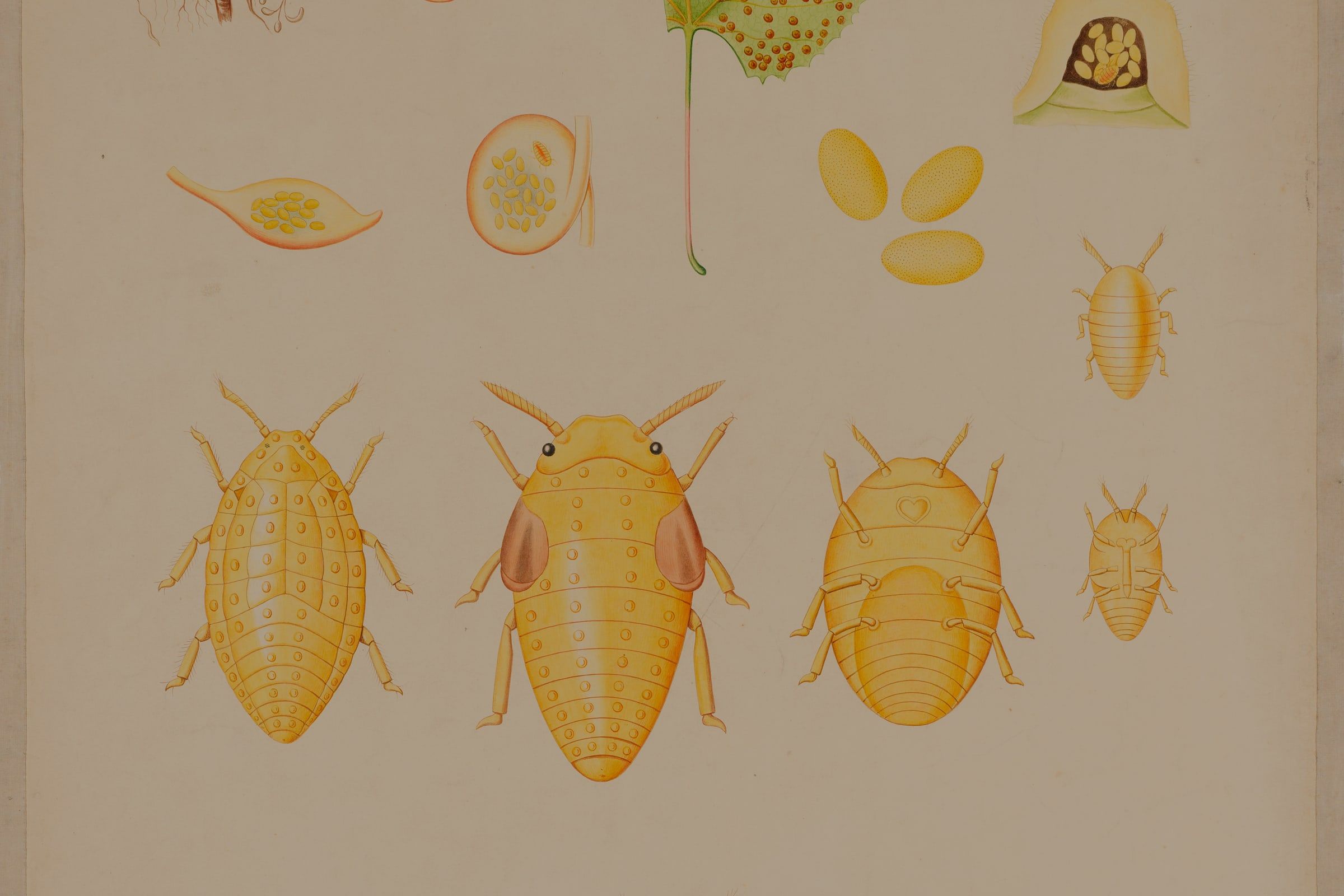
In the 1860s a few vines in a Rhône village turned yellow, dropped their leaves and died. The following year the ring of dead vines was wider. Growers blamed the weather, the soil, the railways. It took five years for a botanist from Montpellier to dig up the roots and find them crawling with a tiny yellow aphid that no one in Europe had seen before.
Phylloxera had crossed the Atlantic on American vines, imported as curiosities by Victorian gardeners. American species had evolved alongside the insect and shrugged it off; European Vitis vinifera had no defence. Within thirty years the blight had spread from Portugal to the Crimea and killed something like two-thirds of the continent’s vineyards. Governments offered prizes. Growers tried chemicals, flooding, prayer.
The answer, when it came, was elegant and humbling: graft the European vine onto an American root. It worked. It also meant that nearly every great wine made since the 1890s grows on a foreign rootstock, and that the handful of places the aphid never reached, Chile above all, became living museums of the pre-blight vine. Meanwhile in Paris, Louis Pasteur had just explained what yeast actually does. Wine was about to become a science.
- Phylloxera arrived on American vines imported by Victorian plant collectors and was first noticed in 1863 near Pujaut in the southern Rhône.
- Jules-Émile Planchon identified the culprit in 1868: a root-feeding aphid barely a millimetre long.
- By the 1890s roughly two-thirds of Europe's vineyards were dead; remedies tried included flooding, carbon disulphide and burying a live toad beneath each vine.
- The cure was grafting European vines onto resistant American rootstock. Almost every vine in Europe today grows on American roots; Chile and parts of South Australia were never infected.
Wine is the most healthful and most hygienic of beverages.
Louis Pasteur, Études sur le vin, 1866
Chapter VII France · California · Australia
1900
1900 – 1990
Prohibition, Appellations and the Judgment of Paris
Laws define wine, science tames it, and a blind tasting in Paris redraws the map.
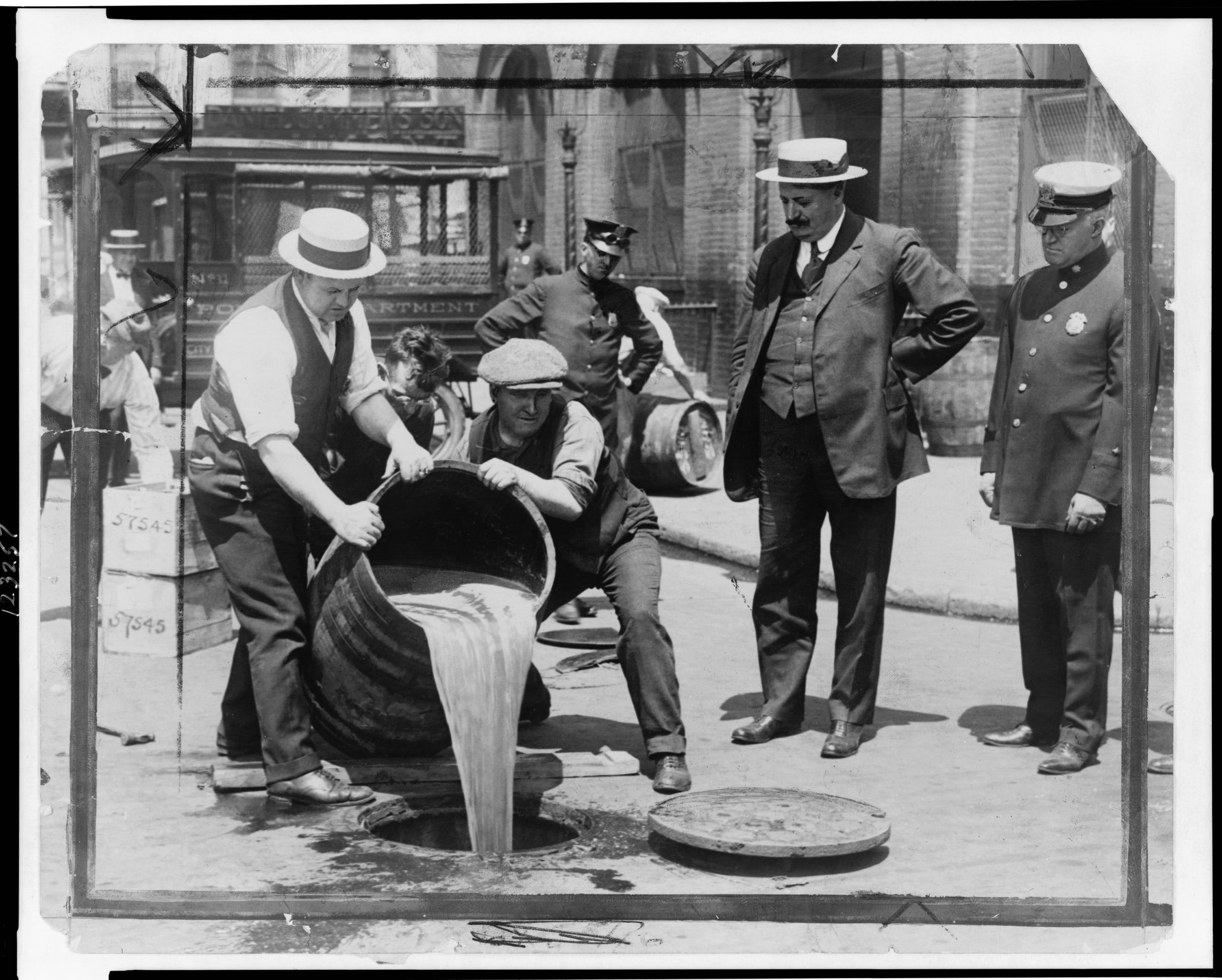
The twentieth century began by trying to stop wine. In the United States the Eighteenth Amendment shut the wineries, and the industry survived on sacramental wine, ‘medicinal’ tonics and a clause that allowed every household to make two hundred gallons of fruit juice a year, which nobody drank as juice. In France, flooded with fraud after phylloxera, the state took the opposite path and wrote the monks’ knowledge into law. From 1935 a wine called Chablis had to come from Chablis.
Then science caught up with the cellar. Pasteur’s yeast became Peynaud’s oenology; stainless steel replaced leaky wood; refrigeration meant fermentations no longer boiled over in a hot September. The result was something new: wine that was reliably clean, fruity and the same from bottle to bottle. Robert Mondavi built a winery in Napa in 1966 on the bet that California could make wine of that kind as well as anyone.
Ten years later a British wine merchant in Paris put the bet to the test. Nine French judges, tasting blind, placed a Napa Chardonnay and a Napa Cabernet first. The only journalist in the room worked for TIME. By the time the story ran, the old map of wine was already obsolete: Australia, Chile, South Africa and New Zealand were on their way.
- American Prohibition (1920–1933) closed most wineries, but a loophole for home winemaking sent grape prices soaring and planted thousands of acres of thick-skinned shipping grapes.
- France created the Institut National des Appellations d'Origine in 1935, turning the monks' terroir into law: the AOC system.
- Émile Peynaud, stainless steel and temperature-controlled fermentation made clean, ripe wine reliable for the first time in history.
- On 24 May 1976, in a blind tasting organised by Steven Spurrier, French judges ranked Chateau Montelena 1973 Chardonnay and Stag's Leap 1973 Cabernet above the best of Burgundy and Bordeaux.
Wine to me is passion. It's family and friends. It's warmth of heart and generosity of spirit.
Robert Mondavi, Harvests of Joy, 1998
Chapter VIII Beaujolais · Friuli · Georgia · Anatolia · England
Now
1990 – today
.jpg)
Back to the Earth
Natural wine, amber wine, a warming planet, and a return to the clay where it all began.
At the end of the twentieth century wine had never been cleaner, riper or more consistent, and a small group of growers decided that was exactly the problem. In Beaujolais, students of a chemist named Jules Chauvet went back to native yeasts, old vines and no sulphur, and called the result natural wine. It was unstable, sometimes faulty, often thrilling. Within two decades it had bars in Paris, Tokyo and New York.
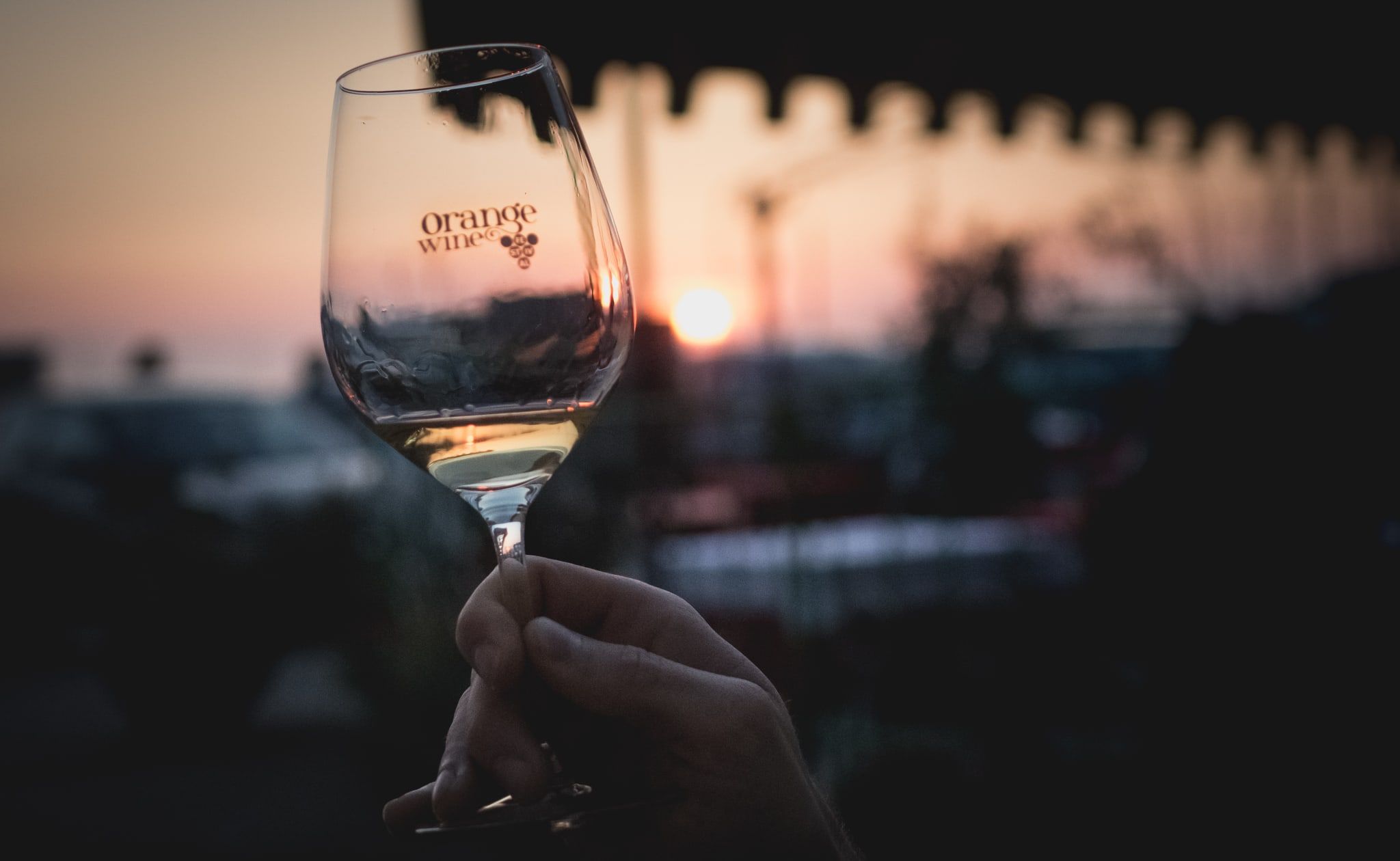
Others went further back. On the Italian–Slovenian border, Josko Gravner shipped clay vessels from Georgia, buried them in his cellar, and fermented white grapes on their skins the way the Shulaveri villagers had. Amber wine, forgotten in the West for a thousand years, came home. In 2013 UNESCO recognised the qvevri as world heritage, and Georgia, where this story began, found itself at the centre of it again.
The climate is rewriting the map once more. Harvests come earlier, alcohol runs higher, and the vine is moving north and uphill, to Kent and Sussex, to the Alps, to Scandinavia. And in Anatolia, within sight of the mountains where the wild grape was first tamed, growers are replanting the varieties their grandparents pulled out. Eight thousand years, one glass, and the pour is not finished.
- In Beaujolais, followers of the chemist Jules Chauvet (Marcel Lapierre, Jean Foillard and others) revived wine without additives, launching the natural wine movement.
- In Friuli, Josko Gravner and Stanko Radikon began fermenting white grapes on their skins in Georgian qvevri, reviving amber, or orange, wine.
- Georgian qvevri winemaking was inscribed on UNESCO's list of Intangible Cultural Heritage in 2013.
- Harvests across Europe now begin weeks earlier than in the 1980s; sparkling wine is made in Kent, and vineyards climb to altitudes that were once impossible.
- Anatolia's native grapes, Öküzgözü, Boğazkere, Kalecik Karası and Narince, are being rediscovered in the very region where the vine was first domesticated.
Wine is sunlight, held together by water.
Attributed to Galileo Galilei